By: Kevin Shai
lunes, 26 de mayo de 2014

Hungry??? Try the top 10 dishes from South Africa

 Biltong
This jerky-type air-dried meat (usually beef) is savored nearly everywhere by nearly everyone. It was a life-sustaining mainstay of the Boers during their historic, northward Great Trek into Africa’s interior in the 1830s.
 Grilled game
The animals are usually farm raised. The rest are legally hunted, or less likely, poached. Local favorites include ostrich, crocodile, and antelope (the eland and springbok are gourmet treasures). If you categorize the popular caterpillar-like mashonzha worm as game meat, then add this widely praised treat to the list. It can be grilled, stewed, whatever.
 Sosaties
Marinated, cubed meat (usually lamb) is skewered and barbecued shish-kebab style.
 Bobotie
It's like the British shepherd's pie, but the minced meat is curried - and the topping is frothy custard instead of mashed potatoes. It has a Cape Malay heritage.
 Boerewors
Literally, farmer’s sausage. It's made with seasoned beef or pork.
 Mealie
Name means maize (corn). Frequently served on-the-cob, or made into a beer. Mealie is also a widely used ingredient in bread or porridge – the basic diet of the poor South African.
 Bredie
A heavily spiced stew incorporating meat (typically lamb) and vegetables. Tomato Bredie is the best-known version of this specialty, introduced by the Cape Malays.
 Rock lobster
This is not a true lobster (it lacks claws), but it's quite tasty, especially when grilled.
 Potjiekos
A traditional meat-and-vegetable stew of the Boers. It's slowly cooked in a three-legged cast-iron pot over coals.
 Melktert
Translates "milk tart". It's a milk-egg-and-sugar dessert custard prepared in a round pastry shell.
 Runners-up
They include:
 Droewor - air-dried sausageHoenerpastei - chicken pieIngelegde vis - pickled fishFrikkadel - meat patty or ballKoeksister - braided crullerSamosa - Indian savory pastry
By: Alexi
domingo, 25 de mayo de 2014
Languages
South Africa is a multilingual country. The country's democratic Constitution, which came into effect on 4 February 1997, recognises 11 official languages, to which it guarantees equal status. These are:
Besides the official languages, scores of others – African, European, Asian and more – are spoken in South Africa, as the country lies at the crossroads of southern Africa.
According to Census 2011, isiZulu is the most common home language is, spoken by nearly a quarter of the population. It is followed by isiXhosa at 17.6%, Afrikaans at 13.3%, Sepedi at 9.4%, and Setswana and English each at 8.2%.
Sesotho is the mother tongue of 7.9% of South Africans, while the remaining four official languages are spoken at home by less than 5% of the population each.
Most South Africans are multilingual, able to speak more than one language. English- and Afrikaans-speaking people tend not to have much ability in indigenous languages, but are fairly fluent in each other's language. Most South Africans speak English, which is fairly ubiquitous in official and commercial public life. The country's other lingua franca is isiZulu.
Nelson Mandeda
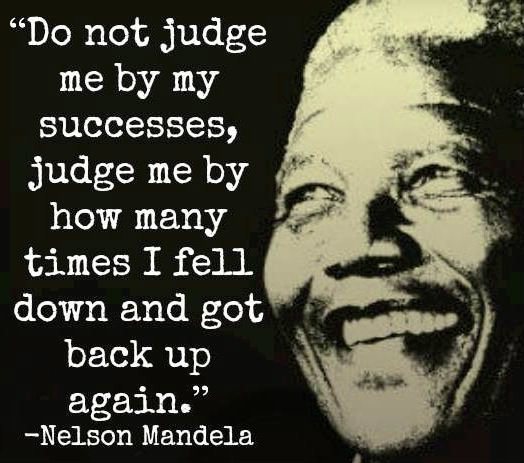
Rolihlahla Mandela was born into the Madiba clan in Mvezo, Transkei, on July 18, 1918, to Nonqaphi Nosekeni and Nkosi Mphakanyiswa Gadla Mandela, principal counsellor to the Acting King of the Thembu people, Jongintaba Dalindyebo.
He attended primary school in Qunu where his teacher Miss Mdingane gave him the name Nelson, in accordance with the custom to give all school children “Christian” names. He completed his Junior Certificate at Clarkebury Boarding Institute and went on to Healdtown, a Wesleyan secondary school of some repute, where he matriculated. Nelson Mandela began his studies for a Bachelor of Arts degree at the University College of Fort Hare but did not complete the degree there as he was expelled for joining in a student protest. He completed his BA through the University of South Africa and went back to Fort Hare for his graduation in 1943. On his return to the Great Place at Mqhekezweni the King was furious and said if he didn’t return to Fort Hare he would arrange wives for him and his cousin Justice. They ran away to Johannesburg instead, arriving there in 1941. There he worked as a mine security officer and after meeting Walter Sisulu, an estate agent, who introduced him to Lazer Sidelsky. He then did his articles through a firm of attorneys, Witkin Eidelman and Sidelsky.
Meanwhile he began studying for an LLB at the University of the Witwatersrand. By his own admission he was a poor student and left the university in 1952 without graduating. He only started studying again through the University of London after his imprisonment in 1962 but also did not complete that degree.
In 1989, while in the last months of his imprisonment, he obtained an LLB through the University of South Africa. He graduated in absentia at a ceremony in Cape Town.
Nelson Mandela, while increasingly politically involved from 1942, only joined the African National Congress in 1944 when he helped to form the ANC Youth League.
In 1944 he married Walter Sisulu’s cousin Evelyn Mase, a nurse. They had two sons, Madiba Thembekile ‘Thembi’ and Makgatho and two daughters both called Makaziwe, the first of whom died in infancy. They effectively separated in 1955 and divorced in 1958. Nelson Mandela rose through the ranks of the ANCYL and through its work, in 1949 the ANC adopted a more radical mass-based policy, the Programme of Action.
In 1952 he was chosen at the National Volunteer-in-Chief of the Defiance Campaign with Maulvi Cachalia as his deputy. This campaign of civil disobedience against six unjust laws was a joint programme between the ANC and the South African Indian Congress. He and 19 others were charged under the Suppression of Communism Act for their part in the campaign and sentenced to nine months hard labour, suspended for two years. A two-year diploma in law on top of his BA allowed Nelson Mandela to practice law, and in August 1952 he and Oliver Tambo established South Africa’s first black law firm, Mandela and Tambo.
At the end of 1952 he was banned for the first time. As a restricted person he was only permitted to watch in secret as the Freedom Charter was adopted in Kliptown on 26 June 1955.
Nelson Mandela was arrested in a countrywide police swoop on 5 December 1955, which led to the 1956 Treason Trial. Men and women of all races found themselves in the dock in the marathon trial that only ended when the last 28 accused, including Mr Mandela were acquitted on 29 March 1961.
On 21 March 1960 police killed 69 unarmed people in a protest against the pass laws held at Sharpeville. This led to the country’s first state of emergency and the banning of the ANC and the Pan Africanist Congress on 8 April. Nelson Mandela and his colleagues in the Treason Trial were among thousands detained during the state of emergency. During the trial on 14 June 1958 Nelson Mandela married a social worker, Winnie Madikizela. They had two daughters, Zenani and Zindziswa. The couple divorced in 1996.
Days before the end of the Treason Trial Nelson Mandela travelled to Pietermaritzburg to speak at the All-in Africa Conference, which resolved that he should write to Prime Minister Verwoerd requesting a non-racial national convention, and to warn that should he not agree there would be a national strike against South Africa becoming a republic. As soon as he and his colleagues were acquitted in the Treason Trial Nelson Mandela went underground and began planning a national strike for 29, 30 and 31 March. In the face of massive mobilisation of state security the strike was called off early. In June 1961 he was asked to lead the armed struggle and helped to establish Umkhonto weSizwe (Spear of the Nation).
On 11 January 1962, using the adopted name David Motsamayi, Nelson Mandela secretly left South Africa. He travelled around Africa and visited England to gain support for the armed struggle. He received military training in Morocco and Ethiopia and returned to South Africa in July 1962. He was arrested in a police roadblock outside Howick on 5 August while returning from KwaZulu-Natal where he briefed ANC President Chief Albert Luthuli about his trip. He was charged with leaving the country illegally and inciting workers to strike. He was convicted and sentenced to five years' imprisonment which he began serving in the Pretoria Local Prison. On 27 May 1963 he was transferred to Robben Island and returned to Pretoria on 12 June. Within a month police raided a secret hide-out in Rivonia used by ANC and Communist Party activists, and several of his comrades were arrested.
On 9 October 1963 Nelson Mandela joined ten others on trial for sabotage in what became known as the Rivonia Trial. While facing the death penalty his words to the court at the end of his famous ‘Speech from the Dock’ on 20 April 1964 became immortalised:
“I have fought against white domination, and I have fought against black domination. I have cherished the ideal of a democratic and free society in which all persons live together in harmony and with equal opportunities. It is an ideal which I hope to live for and to achieve. But if needs be, it is an ideal for which I am prepared to die.”
On 11 June 1964 Nelson Mandela and seven other accused: Walter Sisulu, Ahmed Kathrada, Govan Mbeki, Raymond Mhlaba, Denis Goldberg, Elias Motsoaledi and Andrew Mlangeni were convicted and the next day were sentenced to life imprisonment. Denis Goldberg was sent to Pretoria Prison because he was white, while the others went to Robben Island.
Nelson Mandela’s mother died in 1968 and his eldest son Thembi in 1969. He was not allowed to attend their funerals. On 31 March 1982 Nelson Mandela was transferred to Pollsmoor Prison in Cape Town with Sisulu, Mhlaba and Mlangeni. Kathrada joined them in October. When he returned to the prison in November 1985 after prostate surgery Nelson Mandela was held alone. Justice Minister Kobie Coetsee visited him in hospital. Later Nelson Mandela initiated talks about an ultimate meeting between the apartheid government and the ANC.
On 12 August 1988 he was taken to hospital where he was diagnosed with tuberculosis. After more than three months in two hospitals he was transferred on 7 December 1988 to a house at Victor Verster Prison near Paarl where he spent his last 14 months of imprisonment. He was released from its gates on Sunday 11 February 1990, nine days after the unbanning of the ANC and the PAC and nearly four months after the release of his remaining Rivonia comrades. Throughout his imprisonment he had rejected at least three conditional offers of release.
Nelson Mandela immersed himself in official talks to end white minority rule and in 1991 was elected ANC President to replace his ailing friend Oliver Tambo. In 1993 he and President FW de Klerk jointly won the Nobel Peace Prize and on 27 April 1994 he voted for the first time in his life.
On 10 May 1994 he was inaugurated South Africa’s first democratically elected President. On his 80th birthday in 1998 he married Graça Machel, his third wife.
True to his promise Nelson Mandela stepped down in 1999 after one term as President. He continued to work with the Nelson Mandela Children’s Fund he set up in 1995 and established the Nelson Mandela Foundation and The Mandela Rhodes Foundation.
In April 2007 his grandson Mandla Mandela became head of the Mvezo Traditional Council at a ceremony at the Mvezo Great Place. Nelson Mandela never wavered in his devotion to democracy, equality and learning. Despite terrible provocation, he never answered racism with racism. His life has been an inspiration to all who are oppressed and deprived; to all who are opposed to oppression and deprivation.
He died at his home in Johannesburg on 5 December 2013.
BY: Cinthya
Flag of South Africa
The present South African National flag was first flown on 27 April 1994. However, the flag was first commissioned as an interim flag only, and was decided upon at the very last minute, barely making it onto the nation's flagpoles in time for the election.
The choice of a new flag was part of the negotiation process set in motion when Nelson Mandela was released from prison in 1990. When a nationwide public competition was held in 1993, the National Symbols Commission received more than 7,000 designs. Six designs were drawn up and presented to the public and the Negotiating Council, but none elicited enthusiastic support. A number of design studios were contacted to submit further proposals, but they were again without success. Parliament went into recess at the end of 1993 without a suitable candidate for the new national flag.
None of the flag designs submitted by the public were supported by the committee charged to select the final design.
In February 1994, Cyril Ramaphosa and Roelf Meyer, chief negotiators of the African National Congress and the National Party government of the day respectively, were given the task of resolving the flag issue. A final design was adopted on 15 March 1994, derived from a design developed by State Herald Frederick Brownell, who had also designed the Flag of Namibia. This interim flag was designed by Frederick Brownell for the 27 April elections, the nation's first fully inclusive elections, and for Nelson Mandela's 10 May inauguration.
The proclamation of the new national flag by South African President F. W. de Klerk was only published on 20 April 1994, a mere seven days before the flag was to be inaugurated, sparking a frantic last-minute flurry for flag manufacturers. As stated in South Africa's post-apartheid interim constitution, the flag was to be introduced on an interim probationary period of five years, after which there would be discussion about whether or not to change the national flag in the final draft of the constitution. However, the flag was eventually very well received and was included in the final draft without much debate. Although the flag originally had mixed reception, the interim version was made the final, national flag in the South African Constitution.
BY: Juan Pablo
Structure of Government in South Africa
The South African government is divided into three parts: the Executive (the Cabinet), the Legislature (Parliament), and Judiciary (the courts).
The Executive – Cabinet
The Executive is responsible for ruling the country through different departments or ministries. Each department is responsible for a different issue – for example, there is one for health matters, one for education, and one for sport. The Executive is a committee of all the heads of these departments. This is called the Cabinet
The legislature - Parliament
To legislate means to ‘make laws'. The legislature, or Parliament is where our elected representatives, the members of Parliament (MPs) meet to discuss matters and decide on new laws. The word Parliament comes from the French word for " to speak". Parliament is made up of two groups, the National Assembly and the National Council of Provinces (NCOP). The National Assembly is made up of all the Members of Parliament (MP's) that got seats in the general elections. There are 350 – 400 MP's in our National Assembly. The head of the National Assembly is called the Speaker. It is the Assembly's job to represent the public and to make sure the democratic laws of the Constitution are kept. They also have to check that the Cabinet does its job and does not go against the Constitution.
Judiciary – The Courts
The Judiciary is the court system. This is the part of government that has to make sure that those who do not keep the law are punished. There are different levels of courts. If a case in a low court is appealed, it goes to a higher court. The decision of the higher court can be different, and can overrule the decision of the lower court. The two highest courts in South Africa are the Constitutional Court and the Supreme Court of Appeal. The Constitutional Court has the highest say on matters that have to do with the Constitution. If Parliament wants to make a new law, the Constitutional Court first has to make sure that it does not go against the constitution. The Supreme Court of Appeal has the highest say in all other court matters. The court system is independent from the rest of government. After an election Parliament and the Cabinet can change, but the courts might still look the same. In other words, the elections do not influence the Judiciary.
By:Yuri Alberto
Suscribirse a:
Entradas (Atom)